July 2026 San Mateo County Housing Market Update: AI Wealth, Sticky Rates & A Shifting Bay Area Economy
As we move deeper into summer, the San Mateo County housing market continues to navigate a unique mix of opportunity and uncertainty.
While mortgage rates remain elevated and inflation has accelerated again, demand for quality homes continues to be supported by resilient buyers, limited inventory, and the long-term strength of the Peninsula market.
One of the biggest stories this month isn't just interest rates, it's the continued impact of artificial intelligence on the Bay Area economy. Wealth creation from the AI sector is beginning to reshape parts of the San Francisco housing market, particularly at the luxury end.
Here are the biggest economic trends shaping real estate heading into the second half of 2026.
AI Wealth Is Fueling San Francisco's Luxury Market
One of the most striking trends this month comes from San Francisco's luxury housing market.
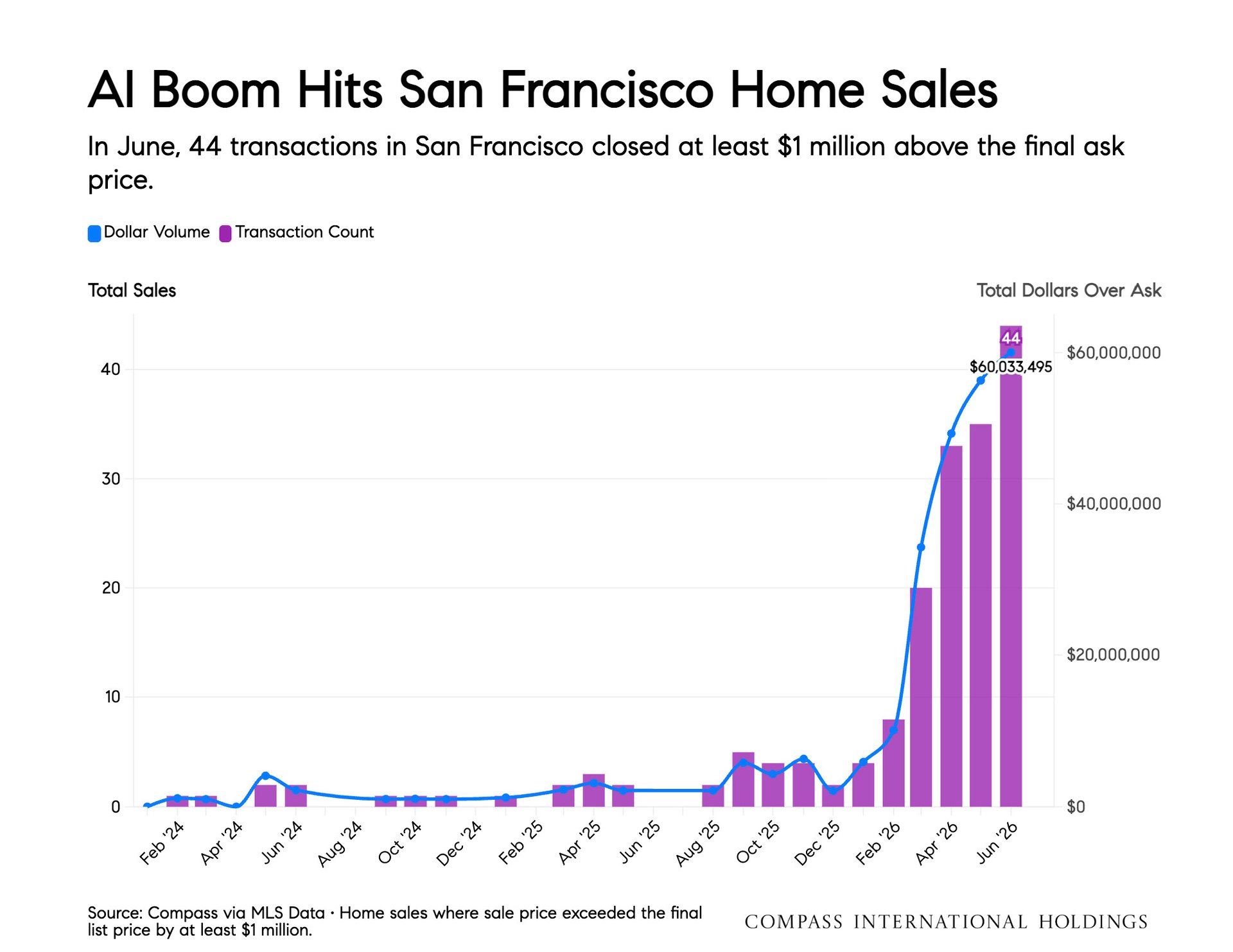
According to Compass data, 44 homes sold for at least $1 million over their asking price in June, representing more than $60 million in total dollars paid above list price.
Many of these transactions are occurring in highly desirable neighborhoods where competition remains intense, particularly among affluent buyers benefiting from continued growth in the technology and AI sectors.
While this activity is concentrated within the luxury market, it highlights an important shift:
- High-end buyer confidence remains strong
- AI-related wealth continues flowing into Bay Area real estate
- Premium properties continue attracting multiple competitive offers
For homeowners across the Peninsula, this reinforces that demand for exceptional homes remains healthy, even in a higher-rate environment.
Luxury Demand Remains Concentrated in Select Neighborhoods
Not every neighborhood is experiencing the same level of competition.
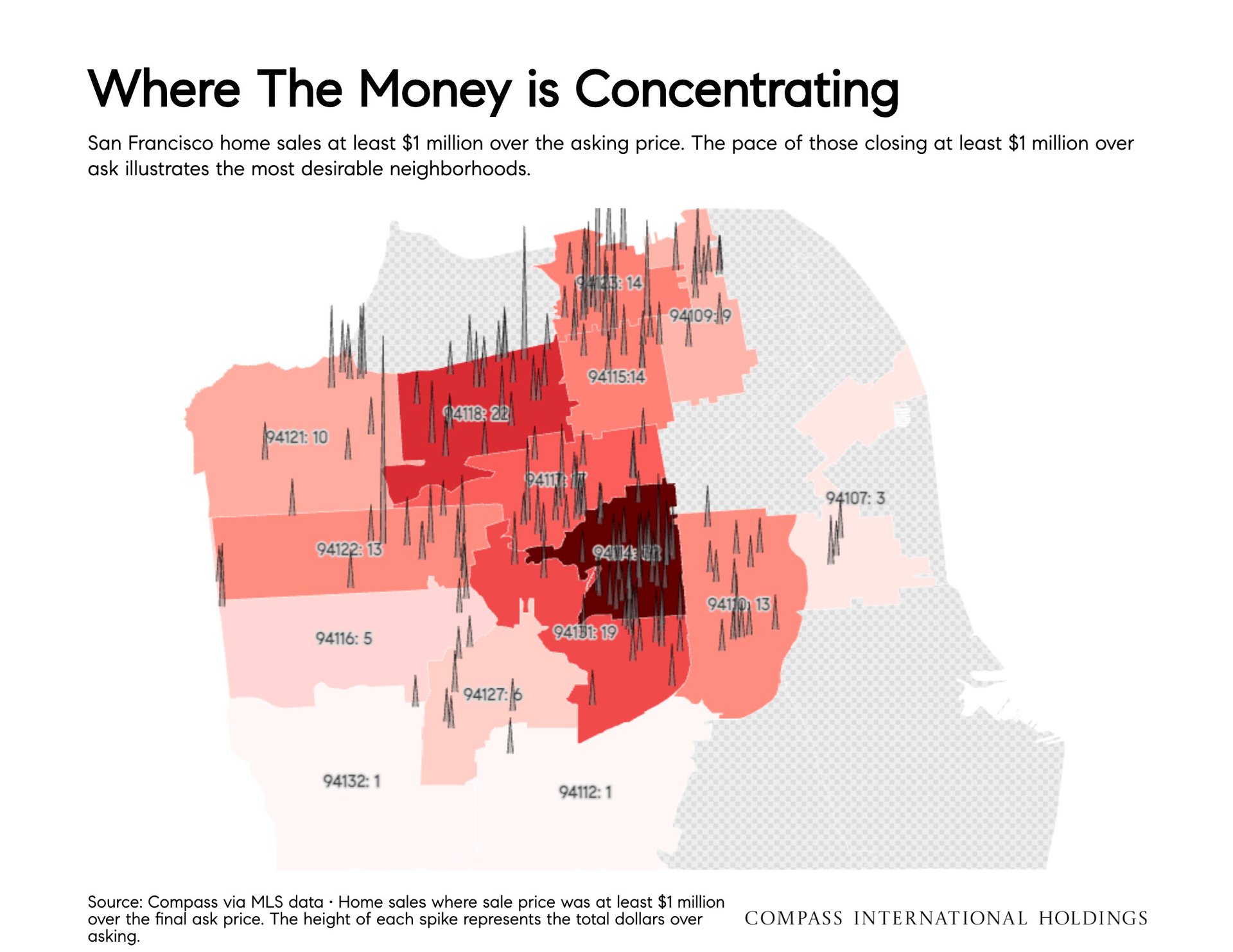
The latest market data shows luxury transactions exceeding asking price are heavily concentrated within San Francisco's most sought-after areas, where inventory remains exceptionally limited.
Location continues to matter more than ever.
Homes offering:
- Prime locations
- Strong presentation
- Updated finishes
- Unique architectural appeal
- Limited competition
continue commanding significant buyer interest.
While San Mateo County operates differently from San Francisco's luxury market, the same principle applies locally: well-positioned homes continue to outperform.
Mortgage Rates Remain in the Mid-6% Range
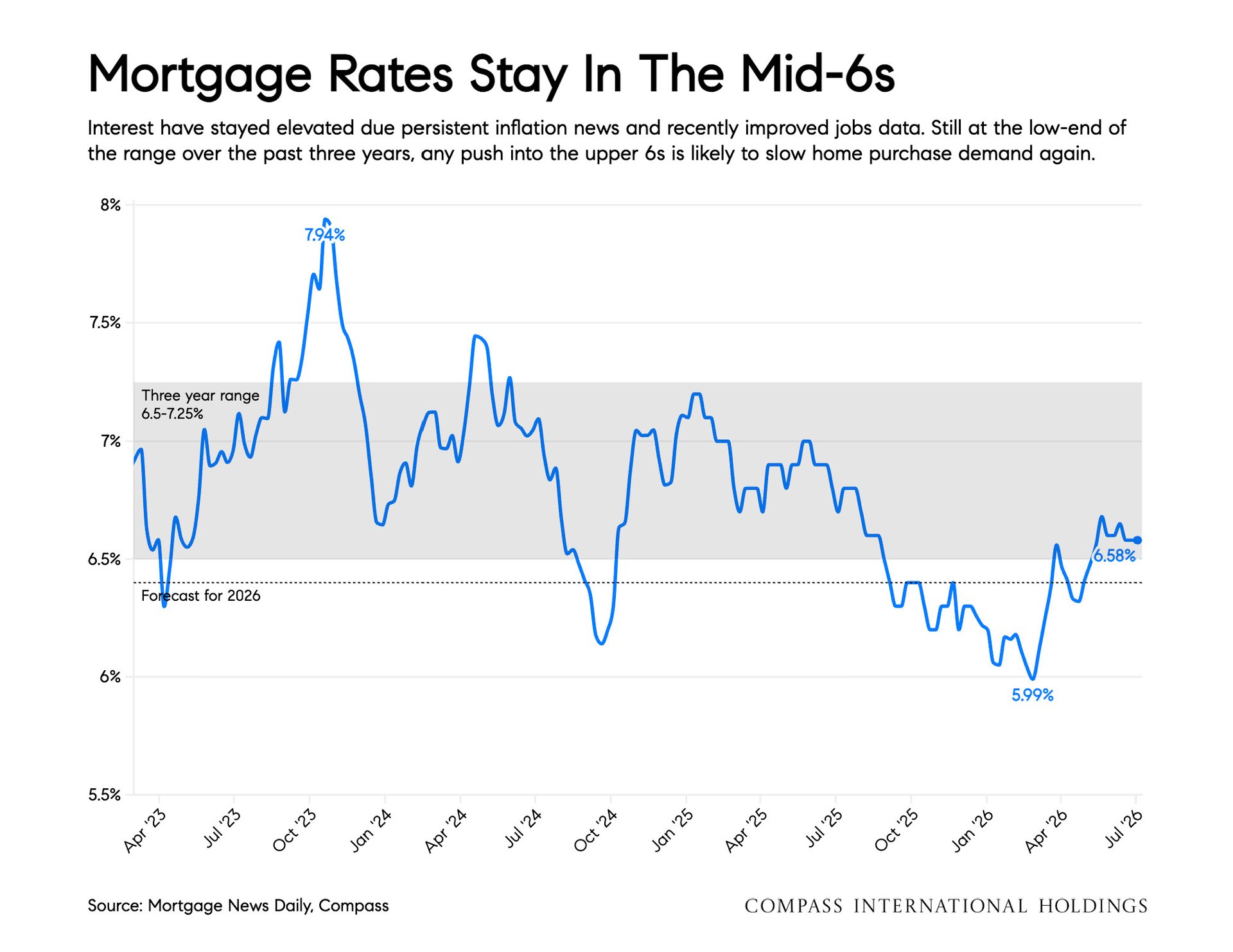
Mortgage rates continue hovering in the mid-6% range after briefly dipping below 6% earlier this year.
Recent rate pressure continues to stem from:
- Persistent inflation
- Stronger-than-expected economic data
- Ongoing government spending
- Continued uncertainty surrounding Federal Reserve policy
Although rates remain elevated compared to the ultra-low borrowing costs seen several years ago, they're still within the range buyers have been adjusting to over the past three years.
For buyers, affordability remains a key consideration.
For sellers, understanding today's payment-sensitive buyers makes accurate pricing more important than ever.
Interest rates remain one of the biggest variables influencing housing activity throughout 2026.
Inflation Has Accelerated Again
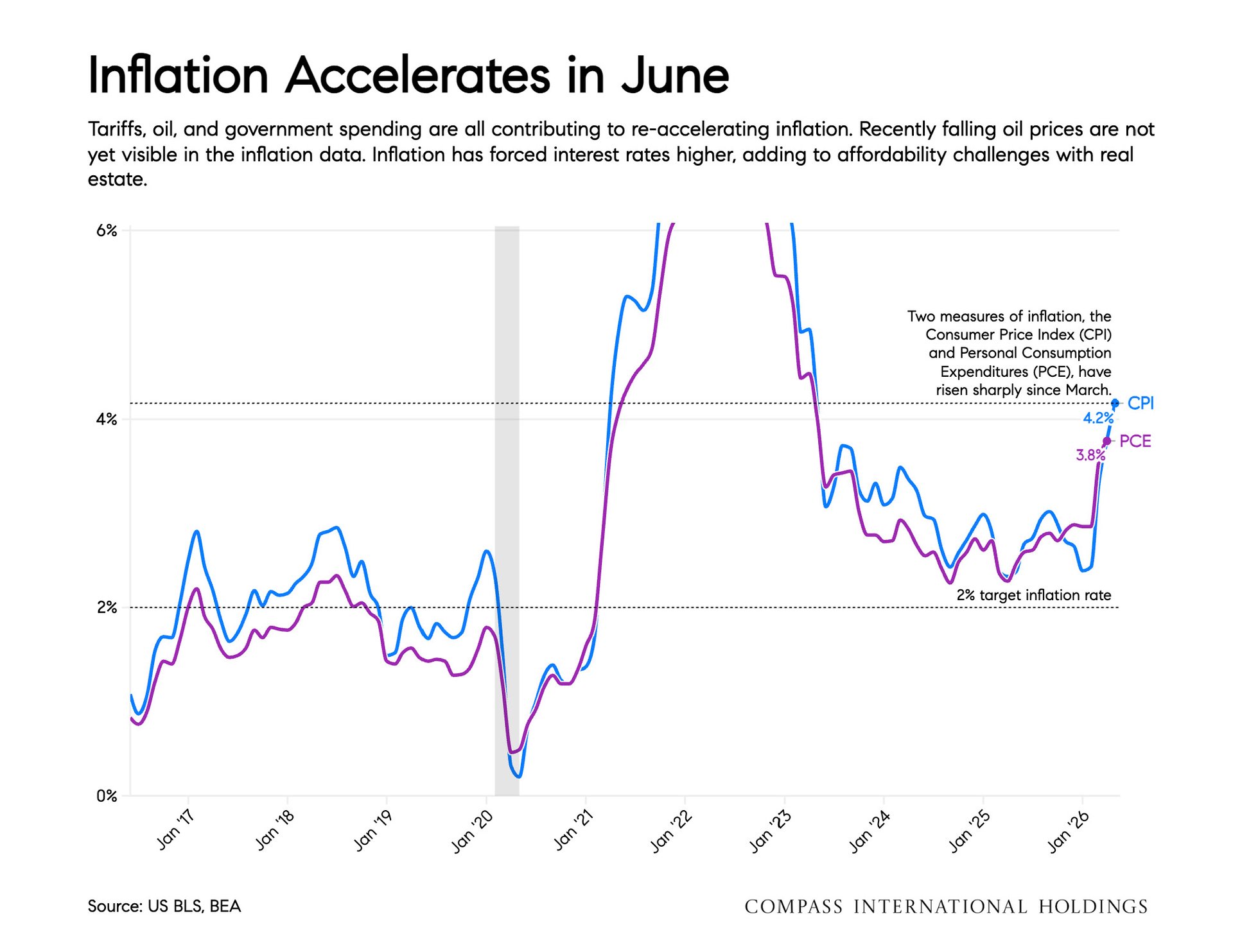
After showing signs of moderation earlier this year, inflation has begun moving higher once again.
Recent CPI and PCE readings indicate inflation remains well above the Federal Reserve's long-term target, keeping pressure on borrowing costs.
Several factors continue contributing to higher inflation:
- Tariffs on imported goods
- Government spending
- Housing-related expenses
- Service-sector inflation
Although oil prices have recently softened, those declines have not yet been fully reflected in inflation data.
For real estate, elevated inflation matters because it directly affects mortgage rates and buyer affordability.
Higher financing costs continue shaping purchasing decisions across every price point.
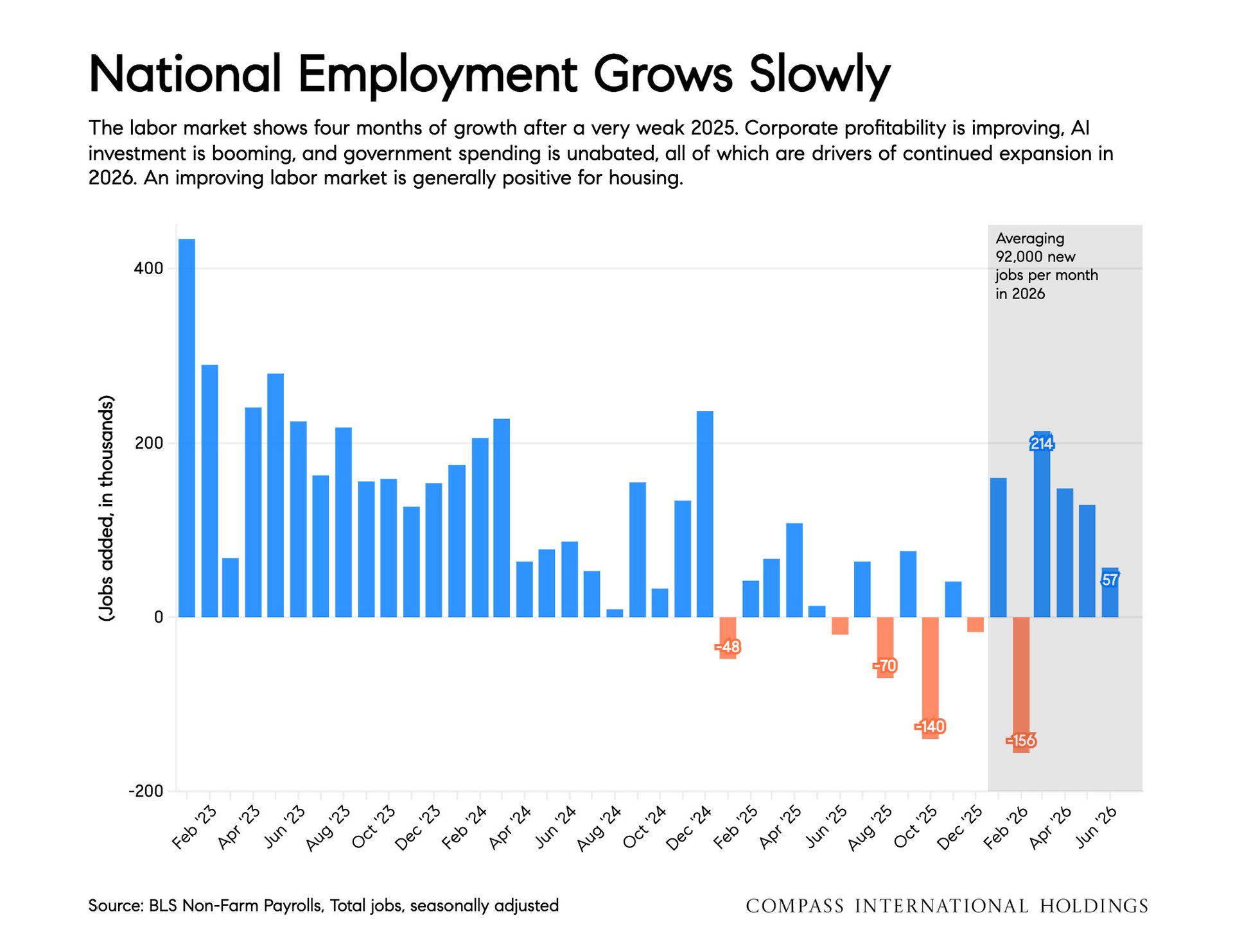
National Employment Continues Expanding
Despite higher borrowing costs, the national labor market continues showing resilience.
The U.S. has now recorded four consecutive months of job growth following a weaker 2025, signaling that employers continue hiring despite broader economic uncertainty.
A healthy labor market remains one of the strongest long-term drivers of housing demand because employment supports:
- Household formation
- Consumer confidence
- Relocation activity
- Home purchasing power
While monthly job gains have moderated from earlier in the year, the overall employment picture remains supportive for housing.
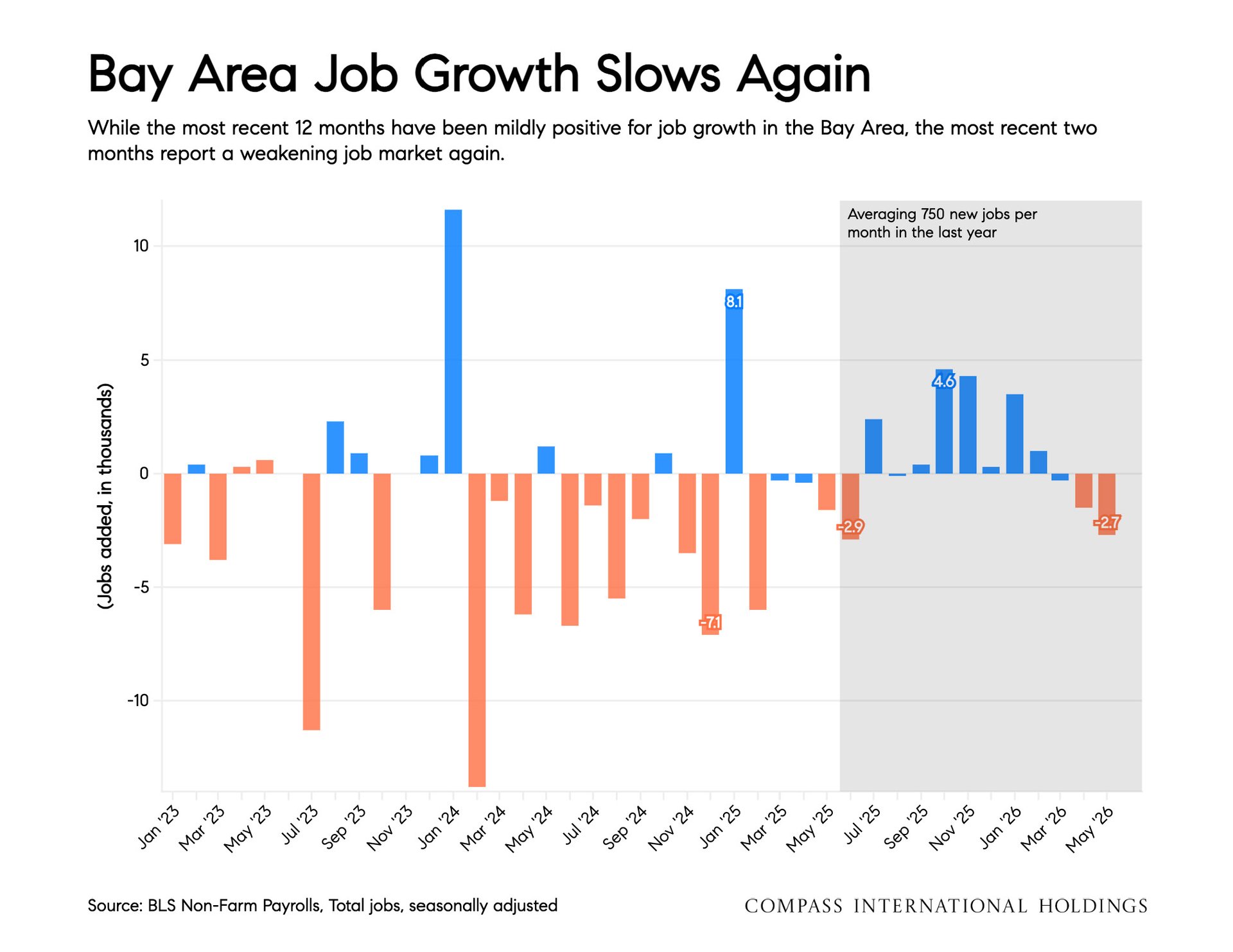
Bay Area Job Growth Has Slowed Again
Locally, however, the picture has softened slightly.
After several encouraging months of positive hiring, recent Bay Area employment reports indicate job growth has slowed once again.
Although the past year has remained modestly positive overall, the latest data suggests employers are becoming more cautious.
This doesn't necessarily indicate weakness, but it does reflect a more measured pace of expansion than earlier in the year.
For San Mateo County, this means:
- Buyer demand remains present
- Hiring continues, but at a slower pace
- Consumer confidence remains relatively healthy
- Housing demand is likely to remain balanced rather than overheated
The Peninsula continues benefiting from its diverse employment base, though local hiring will remain an important trend to watch during the remainder of the year.
What This Means for Buyers
Today's market continues to present both opportunities and challenges.
On one hand:
- Inventory remains relatively limited
- Well-priced homes continue attracting strong interest
- The long-term fundamentals of the Peninsula remain solid
On the other hand:
- Mortgage rates remain elevated
- Affordability pressures persist
- Inflation continues influencing borrowing costs
For buyers, preparation remains the biggest advantage.
That means:
- Securing financing before beginning your search
- Understanding how different interest rates impact monthly payments
- Being prepared to move quickly when the right home becomes available
Buyers who are financially prepared continue to have the greatest success in today's market.
What This Means for Sellers
For sellers, market conditions remain favorable but strategy matters more than ever.
Strong buyer demand still exists for desirable homes, particularly those that are:
- Properly priced
- Move-in ready
- Well presented
- Located in sought-after neighborhoods
Today's buyers are far more payment-conscious than they were during lower-rate years, making accurate pricing and strong marketing essential.
Homes that stand out continue attracting competitive interest, while overpriced listings often require longer market times and price adjustments.
Preparation continues to deliver the strongest results.
Final Thoughts
July's economic data highlights a housing market that's evolving rather than slowing.
Several major trends continue shaping buyer and seller decisions:
- AI-driven wealth is fueling competition in San Francisco's luxury market
- Mortgage rates remain elevated in the mid-6% range
- Inflation has accelerated again
- National employment continues growing
- Bay Area hiring has moderated after earlier gains
While affordability remains a challenge, limited housing supply, resilient buyer demand, and the Peninsula's strong long-term economic fundamentals continue supporting the San Mateo County housing market.
As we move through the second half of 2026, staying informed about both local market conditions and broader economic trends will remain essential for making confident real estate decisions.
If you'd like a personalized analysis of your neighborhood, your home's current value, or your buying strategy, we're always happy to help.
